
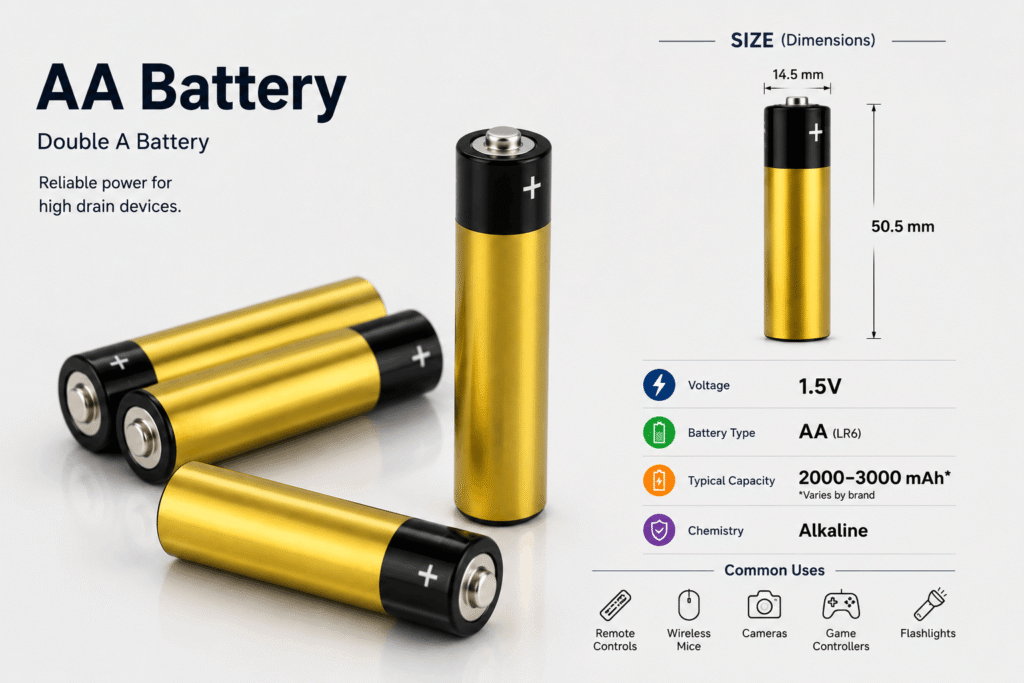
What exactly the AA battery size, AA battery diameter and dimensions of an AA size battery?
An AA battery is a standardized cylindrical battery widely used to power medium- to high-drain electronic devices such as remote controls, flashlights, wireless keyboards, toys, and digital cameras. It is available in various chemistries, including alkaline, lithium, zinc-carbon, and rechargeable NiMH, while maintaining the same physical dimensions.
Standard dimensions of aa size battery
The size of an AA battery is bigger than an AAA battery.
| Specification | Measurement |
|---|---|
| Diameter | 14.5 mm (0.57 in) |
| Length | 50.5 mm (1.99 in) |
| Weight | Approximately 14–30 g (depends on battery chemistry) |
| Nominal Voltage | 1.5 V (Alkaline, Lithium, Zinc-Carbon) or 1.2 V (NiMH Rechargeable) |
AA Battery Size in Different Units
| Unit | Size |
|---|---|
| Millimeters (mm) | 14.5 × 50.5 mm |
| Centimeters (cm) | 1.45 × 5.05 cm |
| Inches (in) | 0.57 × 1.99 in |
Why AA Battery Size Is Standardized?
The AA battery follows internationally recognized standards (IEC LR6/HR6 and ANSI 15A), meaning batteries from different manufacturers share the same physical dimensions. Whether you purchase batteries from Duracell, Energizer, Panasonic, or another brand, they are manufactured to fit the same battery compartment. If anywhere need a larger size battery then, D battery dimensions are bigger than AA cell, D batteries can be used where it is fits.
This standardization offers several benefits:
- Universal compatibility with thousands of electronic devices.
- Easy replacement regardless of manufacturer.
- Consistent fit and electrical contact for reliable performance.
- Availability worldwide, making AA batteries one of the easiest battery sizes to find.
Does Battery Chemistry Change the AA Battery Size?
No. The physical dimensions remain the same regardless of chemistry. However, weight, voltage, capacity, and performance vary.
| Battery Type | Size | Nominal Voltage |
|---|---|---|
| Alkaline AA | 14.5 × 50.5 mm | 1.5 V |
| Lithium AA | 14.5 × 50.5 mm | 1.5 V |
| Zinc-Carbon AA | 14.5 × 50.5 mm | 1.5 V |
| NiMH Rechargeable AA | 14.5 × 50.5 mm | 1.2 V |
Types of AA Batteries
AA batteries can be broadly divided into two categories: Non-Rechargeable (Primary) Batteries and Rechargeable (Secondary) Batteries. While both share the same standardized AA size (14.5 × 50.5 mm), they differ in chemistry, voltage, lifespan, and intended use.
1. Non-Rechargeable AA Batteries (Primary Batteries)
These batteries are designed for single-use only and must be replaced once they are discharged. They offer excellent shelf life and are ideal for devices that require reliable, maintenance-free power.
A. Alkaline AA Batteries
Alkaline batteries are the most popular and widely used type of AA battery. They provide a good balance of performance, affordability, and availability, making them suitable for everyday household electronics.
Key Features
- Nominal Voltage: 1.5V
- Typical Capacity: 2,000–3,000 mAh
- Shelf Life: 5–10 years
- Best For: Medium- and low-drain devices
Advantages
- Affordable and widely available
- Long shelf life
- Leak-resistant designs in premium brands
- Good all-around performance
Disadvantages
- Cannot be recharged
- Performance decreases in very cold temperatures
- Higher long-term cost if used frequently
Common Applications
- TV remotes
- Wall clocks
- Wireless mice and keyboards
- Flashlights
- Toys
B. Lithium AA Batteries
Lithium AA batteries deliver higher energy density, lighter weight, and excellent performance under extreme temperatures. They are the preferred choice for high-performance and outdoor electronics.
Key Features
- Nominal Voltage: 1.5V
- Typical Capacity: 2,700–3,500 mAh
- Shelf Life: Up to 20 years
- Best For: High-drain and mission-critical devices
Advantages
- Longest shelf life
- Lightweight construction
- Excellent performance in hot and cold environments
- Consistent voltage output
- Leak-resistant
Disadvantages
- More expensive than alkaline batteries
- Not rechargeable
Common Applications
- Digital cameras
- Outdoor security devices
- Emergency flashlights
- GPS units
- Smoke detectors
C. Zinc-Carbon AA Batteries
Zinc-carbon batteries are the most economical AA batteries and are best suited for low-power devices with minimal energy demands.
Key Features
- Nominal Voltage: 1.5V
- Typical Capacity: 400–1,000 mAh
- Shelf Life: 2–5 years
- Best For: Low-drain devices
Advantages
- Lowest purchase cost
- Suitable for basic electronics
- Readily available
Disadvantages
- Lower capacity
- Shorter lifespan
- Poor performance in high-drain devices
Common Applications
- Clocks
- Basic remote controls
- Small LED lights
- Portable radios
2. Rechargeable AA Batteries (Secondary Batteries)
Rechargeable AA batteries can be recharged hundreds to thousands of times, making them cost-effective and environmentally friendly for frequently used devices.
A. Nickel-Metal Hydride (NiMH) AA Batteries
NiMH batteries are the most common rechargeable AA batteries available today. They offer high capacity, stable performance, and excellent value for everyday use.
Key Features
- Nominal Voltage: 1.2V
- Typical Capacity: 1,900–2,800 mAh
- Recharge Cycles: 500–2,100+ cycles
- Best For: Medium- and high-drain devices
Advantages
- Rechargeable hundreds of times
- High capacity
- Cost-effective over the long term
- Environmentally friendly
- Low self-discharge versions retain charge for months
Disadvantages
- Lower nominal voltage than disposable batteries
- Requires a compatible charger
- Higher initial investment
Common Applications
- Digital cameras
- Gaming controllers
- Wireless keyboards and mice
- LED flashlights
- Children’s toys
B. Lithium-Ion (Li-ion) Rechargeable AA Batteries
Lithium-ion AA batteries contain an internal voltage regulation circuit that provides a constant 1.5V output, making them suitable for devices that perform best with stable voltage.
Key Features
- Output Voltage: Regulated 1.5V
- Typical Capacity: 1,500–2,500 mAh (varies by design)
- Recharge Cycles: 500–1,000 cycles
- Best For: High-performance electronics
Advantages
- Stable voltage throughout discharge
- Fast charging
- Lightweight
- Excellent performance in high-drain devices
Disadvantages
- More expensive
- Requires a dedicated charger or USB charging system
- Built-in electronics increase cost
Common Applications
- Camera accessories
- Smart home devices
- High-powered flashlights
- Wireless peripherals
- Professional electronics
Key Takeaways
- Non-rechargeable AA batteries (Alkaline, Lithium, and Zinc-Carbon) are ideal for occasional use, emergency storage, and devices where replacing batteries infrequently is acceptable.
- Rechargeable AA batteries (NiMH and Li-ion) are the better choice for frequently used devices, offering significant long-term savings and reducing environmental waste.
- For everyday electronics, alkaline batteries provide the best balance of cost and performance.
- For high-drain devices like digital cameras and powerful flashlights, Lithium or Rechargeable NiMH/Li-ion batteries deliver the best runtime and reliability.
- Choosing the right AA battery depends on your device’s power requirements, usage frequency, budget, and whether rechargeability is a priority.
AA Battery Capacity and Performance
The capacity and performance of an AA battery depend primarily on its chemistry, the power demands of the device, and the operating environment. While all AA batteries share the same physical size, their runtime, discharge characteristics, and overall efficiency can vary significantly.
AA Battery Capacity
Battery capacity is measured in milliampere-hours (mAh) and indicates how much electrical charge a battery can store. In general, a higher mAh rating means a longer runtime, although actual performance depends on the device’s power consumption.
| Battery Type | Rechargeable | Voltage | Typical Capacity | Best For |
|---|---|---|---|---|
| Alkaline | ❌ | 1.5V | 2,000–3,000 mAh | Everyday household devices |
| Lithium | ❌ | 1.5V | 2,700–3,500 mAh | High-drain & extreme temperatures |
| Zinc-Carbon | ❌ | 1.5V | 400–1,000 mAh | Low-drain electronics |
| NiMH | ✅ | 1.2V | 1,900–2,800 mAh | Frequently used devices |
| Li-ion (1.5V Regulated) | ✅ | 1.5V | 1,500–2,500 mAh | Premium high-performance devices |
Note: The advertised mAh for 1.5V regulated Li-ion AA batteries may not be directly comparable to alkaline or NiMH batteries because many manufacturers rate capacity based on the internal 3.6–3.7V lithium-ion cell or convert it differently. For a fair comparison, consider watt-hours (Wh) when available.
AA Battery Performance
Performance refers to how efficiently a battery delivers power throughout its lifespan. Important factors include voltage stability, runtime, shelf life, temperature tolerance, rechargeability, and performance under heavy loads.
1. Alkaline AA Batteries
Alkaline batteries provide reliable all-around performance for most household electronics.
Performance Characteristics
- Delivers 1.5V when new.
- Voltage gradually decreases as the battery discharges.
- Performs best in low- to medium-drain devices.
- Shelf life of 5–10 years.
- Moderate performance in cold weather.
Best Applications
- TV remotes
- Wall clocks
- Wireless keyboards and mice
- Flashlights
- Toys
Overall Performance: ★★★★☆
2. Lithium AA Batteries
Lithium AA batteries offer the highest overall performance among disposable AA batteries.
Performance Characteristics
- Consistent voltage throughout most of the discharge cycle.
- Excellent efficiency in high-drain electronics.
- Operates reliably in temperatures from approximately -40°C to 60°C (-40°F to 140°F).
- Extremely lightweight.
- Shelf life of up to 20 years.
Best Applications
- Digital cameras
- GPS units
- Emergency equipment
- Outdoor sensors
- Professional flashlights
Overall Performance: ★★★★★
3. Zinc-Carbon AA Batteries
Zinc-carbon batteries are designed for basic, low-power applications.
Performance Characteristics
- Lower energy capacity.
- Voltage drops relatively quickly during use.
- Unsuitable for high-drain devices.
- Shorter shelf life (2–5 years).
Best Applications
- Basic clocks
- Simple remote controls
- Small LED lights
- Portable radios
Overall Performance: ★★☆☆☆
4. NiMH Rechargeable AA Batteries
NiMH batteries are the best rechargeable option for most consumers.
Performance Characteristics
- Nominal voltage of 1.2V.
- Delivers high current efficiently for demanding devices.
- Can be recharged 500–2,100+ times, depending on the model.
- Low self-discharge variants retain charge for months when stored.
- Better long-term value than disposable batteries.
Best Applications
- Gaming controllers
- Camera flashes
- Wireless peripherals
- Rechargeable flashlights
- Children’s toys
Overall Performance: ★★★★★
5. Li-ion Rechargeable AA Batteries
Li-ion AA batteries use built-in electronics to provide a regulated 1.5V output, delivering nearly constant voltage until the battery is almost empty.
Performance Characteristics
- Stable voltage improves performance in voltage-sensitive devices.
- Fast charging.
- Lightweight.
- Excellent efficiency under heavy loads.
- Typically lasts 500–1,000 recharge cycles.
Best Applications
- Smart home devices
- Professional equipment
- LED flashlights
- Cameras
- Wireless electronics
Overall Performance: ★★★★★
Factors That Affect AA Battery Performance
Even the best AA battery will perform differently depending on how it is used.
- Device Power Consumption: High-drain devices consume energy much faster than low-drain devices.
- Operating Temperature: Extreme heat or cold can reduce battery efficiency, although lithium batteries perform much better than other chemistries in harsh conditions.
- Storage Conditions: Cool, dry storage helps preserve battery capacity and extends shelf life.
- Battery Age: Capacity naturally decreases over time, even if a battery is unused.
- Quality of Manufacturing: Premium brands typically offer more consistent capacity, lower leakage risk, and better reliability than low-cost alternatives.
Performance Comparison
| Battery Type | Capacity | Runtime | High-Drain Performance | Shelf Life | Temperature Resistance |
|---|---|---|---|---|---|
| Alkaline | ★★★★☆ | ★★★★☆ | ★★★☆☆ | ★★★★☆ | ★★★☆☆ |
| Lithium | ★★★★★ | ★★★★★ | ★★★★★ | ★★★★★ | ★★★★★ |
| Zinc-Carbon | ★★☆☆☆ | ★★☆☆☆ | ★☆☆☆☆ | ★★☆☆☆ | ★★☆☆☆ |
| NiMH | ★★★★☆ | ★★★★★ | ★★★★★ | ★★★☆☆ | ★★★★☆ |
| Li-ion (1.5V) | ★★★★☆ | ★★★★★ | ★★★★★ | ★★★★☆ | ★★★★☆ |
How to Choose the Best AA Battery for yourself?
Choosing the best AA battery isn’t about buying the most expensive option—it’s about matching the battery to your device and how you use it. Consider factors like battery chemistry, capacity, voltage, runtime, rechargeability, shelf life, and operating conditions to get the best performance and value.
1. Match the Battery to Your Device
Different devices have different power requirements.
| Device Type | Recommended AA Battery |
|---|---|
| TV remotes, wall clocks, wireless keyboards | Alkaline |
| Digital cameras, flashlights, gaming controllers | Lithium or NiMH Rechargeable |
| Children’s toys | NiMH Rechargeable |
| Smoke detectors, emergency flashlights | Lithium |
| Low-power devices used occasionally | Zinc-Carbon or Alkaline |
Tip: High-drain devices benefit from Lithium or NiMH rechargeable batteries, while low-drain devices perform well with Alkaline batteries.
2. Consider Battery Capacity
Capacity is measured in mAh (milliampere-hours) and affects how long a battery lasts.
- Higher capacity = Longer runtime
- Choose batteries with higher capacity for devices you use frequently.
- For rechargeable batteries, capacities between 2,000–2,800 mAh provide an excellent balance of runtime and longevity.
3. Decide Between Rechargeable and Non-Rechargeable
Choose Rechargeable Batteries If:
- You use the device every day or several times a week.
- You want to reduce long-term costs.
- You prefer an environmentally friendly option.
Choose Non-Rechargeable Batteries If:
- The device is used occasionally.
- You need batteries for emergency backup.
- You don’t want to maintain a charger.
4. Check Shelf Life
If you’re buying batteries to store for future use:
- Lithium AA: Up to 20 years
- Alkaline AA: 5–10 years
- Zinc-Carbon AA: 2–5 years
- NiMH Rechargeable: Best when used regularly rather than stored long-term.
Long shelf life is especially important for emergency kits, smoke detectors, and backup flashlights.
5. Consider Temperature Conditions
If your device will be used outdoors or in extreme weather:
- ✅ Lithium batteries perform best in both hot and cold temperatures.
- ⚠️ Alkaline batteries may lose performance in freezing conditions.
- ✅ NiMH batteries perform well in most everyday environments.
6. Buy from Trusted Brands
Reputable manufacturers typically provide:
- Accurate capacity ratings
- Better leak protection
- More consistent performance
- Longer shelf life
- Higher manufacturing quality
7. Compare Cost vs. Long-Term Value
The cheapest battery isn’t always the most economical.
- Alkaline batteries are affordable for occasional use.
- Lithium batteries cost more but last significantly longer.
- Rechargeable NiMH batteries have a higher upfront cost but can be reused hundreds of times, making them the most cost-effective for frequent use.
Quick Buying Guide
| If You Need… | Choose… |
|---|---|
| Best overall for everyday use | Alkaline AA |
| Longest runtime | Lithium AA |
| Best value for frequent use | NiMH Rechargeable AA |
| Stable voltage for sensitive electronics | 1.5V Li-ion Rechargeable AA |
| Lowest upfront cost | Zinc-Carbon AA |
| Best for emergency storage | Lithium AA |
Common Mistakes to Avoid
- Don’t choose batteries based only on price.
- Don’t use zinc-carbon batteries in high-drain devices.
- Don’t mix old and new batteries or different battery chemistries in the same device.
- Don’t ignore the recommended battery type in your device’s manual.
- Don’t leave depleted batteries in devices for long periods, as they may leak and damage the equipment.
Storage, Maintenance, and Safe Disposal of AA Batteries
Proper storage, maintenance, and disposal are essential for maximizing the lifespan, performance, and safety of AA batteries. Whether you use disposable or rechargeable AA batteries, following a few best practices can prevent leaks, extend battery life, and reduce environmental impact.
1. Proper Storage of AA Batteries
Correct storage helps preserve battery capacity and minimizes the risk of leakage or damage.
Store in a Cool, Dry Place
- Keep batteries at 10–25°C (50–77°F) whenever possible.
- Avoid humid environments, as moisture can corrode battery terminals.
- Store away from direct sunlight, radiators, or other heat sources.
Keep Batteries in Their Original Packaging
- Original packaging prevents the terminals from touching metal objects.
- If batteries are removed from the package, store them in a dedicated battery case or non-conductive container.
Avoid Contact with Metal Objects
Loose batteries should never come into contact with:
- Keys
- Coins
- Paper clips
- Nails
- Other batteries
Metal objects can short-circuit the battery, causing overheating or leakage.
Separate New and Used Batteries
- Store new and partially used batteries separately.
- Mixing them can lead to uneven discharge and reduced performance.
Check Expiration Dates
- Use older batteries before newer ones (First In, First Out).
- Replace batteries that have expired or show signs of leakage.
2. AA Battery Maintenance
Proper maintenance helps ensure reliable performance and extends battery life.
Don’t Mix Battery Types
Never combine:
- Old and new batteries
- Different brands
- Different chemistries (alkaline, lithium, NiMH, zinc-carbon)
Mixing batteries can cause reduced performance, leakage, or overheating.
Replace All Batteries Together
When a device uses multiple AA batteries:
- Replace the entire set at the same time.
- Use batteries of the same brand, type, and age.
Remove Batteries from Unused Devices
If a device won’t be used for several months:
- Remove the batteries before storage.
- This reduces the risk of leakage and corrosion.
Clean Battery Contacts
Dirty or corroded contacts reduce electrical conductivity.
To clean terminals:
- Use a dry cloth or cotton swab.
- If corrosion is present, lightly clean with isopropyl alcohol and allow the contacts to dry completely before inserting new batteries.
Recharge Rechargeable Batteries Correctly
For NiMH or Li-ion AA batteries:
- Use only the charger recommended by the manufacturer.
- Avoid overcharging if the charger lacks automatic shutoff.
- Allow batteries to cool before recharging after heavy use.
3. Safe Disposal of AA Batteries
Proper disposal protects the environment and complies with local regulations.
Never Throw Batteries into Fire
AA batteries may:
- Explode
- Leak hazardous materials
- Release toxic gases when exposed to high temperatures
Do Not Crush or Puncture Batteries
Damaging the battery casing can cause:
- Chemical leakage
- Fire risk (especially lithium-based batteries)
- Environmental contamination
Recycle Whenever Possible
Recycling recovers valuable materials and prevents unnecessary landfill waste.
Many locations provide battery recycling through:
- Municipal recycling centers
- Electronics retailers
- Household hazardous waste collection programs
Rechargeable batteries should always be recycled where facilities are available.
Cover Battery Terminals Before Recycling
For lithium or rechargeable batteries:
- Place non-conductive tape over the positive and negative terminals.
- This prevents accidental short circuits during transport and storage.
Follow Local Recycling Regulations
Battery disposal rules vary by country and region. Always follow local guidelines for disposing of disposable and rechargeable batteries safely.
Common Storage and Maintenance Mistakes
Avoid these common mistakes to improve battery lifespan and safety:
- Storing batteries in hot cars or direct sunlight.
- Refrigerating or freezing household AA batteries (generally unnecessary and may cause condensation when removed).
- Mixing old and new batteries in the same device.
- Leaving depleted batteries inside electronics for long periods.
- Using damaged, swollen, or leaking batteries.
- Charging non-rechargeable AA batteries.
- Disposing of rechargeable batteries with general household waste where recycling programs exist.
Best Practices Checklist of AA cell
| Practice | Recommendation |
|---|---|
| Storage Temperature | 10–25°C (50–77°F), cool and dry |
| Humidity | Keep away from moisture |
| Battery Mixing | Use the same brand, type, and age together |
| Long-Term Storage | Remove batteries from unused devices |
| Rechargeable Batteries | Charge only with a compatible charger |
| Disposal | Recycle whenever possible and follow local regulations |
| Safety | Never burn, crush, puncture, or short-circuit batteries |
Conclusion
AA batteries remain one of the most reliable and versatile power sources for everyday electronics. By understanding the different battery types, their capacity, performance, and ideal applications, you can choose the right option for your specific needs. Whether you prioritize long runtime, rechargeability, or cost-effectiveness, selecting a quality AA battery and following proper storage, maintenance, and disposal practices will ensure better performance, longer battery life, and a safer, more sustainable experience.