
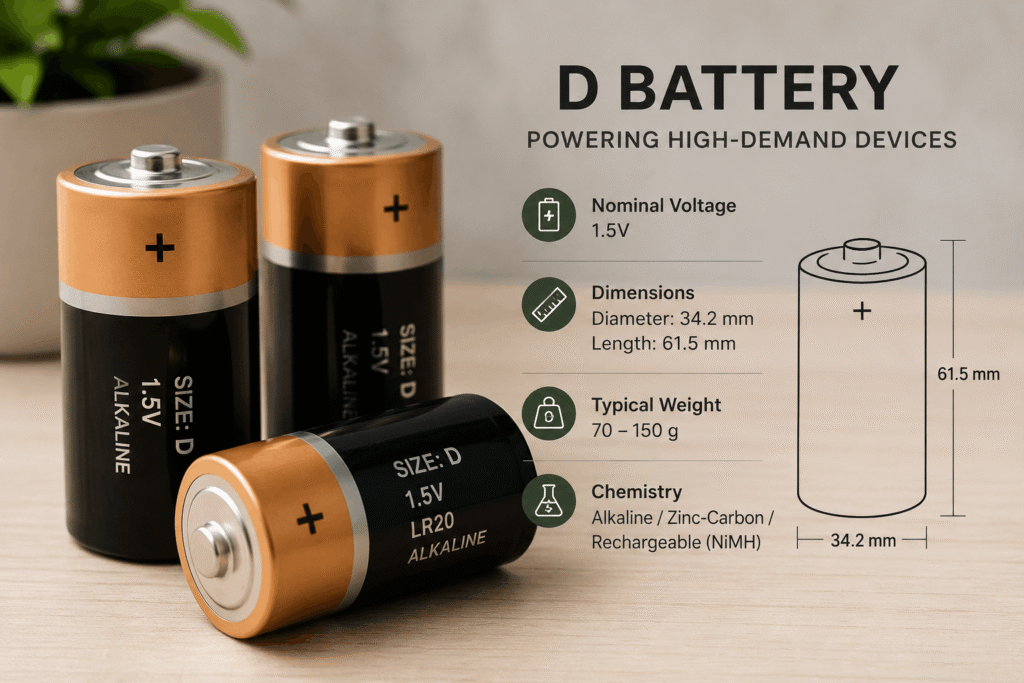
D battery Dimensions
A D battery is a large cylindrical battery measuring approximately 34.2 mm (1.35 in) in diameter and 61.5 mm (2.42 in) in length. The larger battery size allows it to provide higher capacity and longer runtime than AA batteries and AAA batteries, making it suitable for high-drain devices such as flashlights, radios, and toys.
| Specification | D Battery |
|---|---|
| IEC Designation | LR20 (Alkaline), HR20 (NiMH) |
| Battery Size | D |
| Shape | Cylindrical |
| Diameter | 34.2 mm (1.35 in) |
| Length | 61.5 mm (2.42 in) |
| Nominal Voltage | 1.5V (Alkaline, Zinc-Carbon) / 1.2V (NiMH Rechargeable) |
| Typical Weight | 70–150 g (varies by chemistry) |
| Capacity Range | 3,000–20,000+ mAh (depends on chemistry and manufacturer) |
| Common Chemistries | Alkaline, Zinc-Carbon, NiMH, NiCd, Lithium |
| Primary Applications | Flashlights, lanterns, portable radios, toys, emergency equipment |
Quick Size Comparison
| Battery Size | Diameter | Length |
|---|---|---|
| AAA | 10.5 mm | 44.5 mm |
| AA | 14.5 mm | 50.5 mm |
| C | 26.2 mm | 50.0 mm |
| D | 34.2 mm | 61.5 mm |
Definition of a D Battery
A D battery is a large, cylindrical battery designed to deliver higher capacity and longer runtime than smaller batteries such as AA and AAA. It typically provides 1.5V in primary versions and is commonly used in high-drain devices such as flashlights, radios, lanterns, and toys. D batteries are available in both non-rechargeable and rechargeable chemistries.
Types of D Batteries
D batteries are available in several chemistries, each offering different voltage, capacity, runtime, and performance characteristics. They can be divided into two main categories: Non-Rechargeable and Rechargeable.
1. Non-Rechargeable D Batteries
A. Alkaline D Batteries
Alkaline D batteries are the most common type of D battery, offering a good balance of capacity, reliability, and affordability.
Key Features
- Nominal Voltage: 1.5 V
- Typical Capacity: ~8,000–20,000 mAh
- Long life
- Alkaline D cells are designed for single use
Advantages
- High capacity and long runtime
- Alkaline batteries are affordable and widely available
- Reliable for everyday applications
- Good shelf life
Disadvantages
- Cannot be recharged
- Heavier than smaller battery formats
- Performance decreases as voltage falls during discharge
Common Applications
- High-power large flashlights
- Lanterns
- Radios
- Toys
- Emergency equipment
B. Zinc-Carbon D Batteries
Zinc-carbon D batteries are an economical option designed primarily for low-drain applications.
Key Features
- Nominal Voltage: 1.5V
- Lower capacity than alkaline
- Single-use battery
- Low-cost chemistry
Advantages
- Inexpensive
- Suitable for basic devices
- Widely available in some markets
Disadvantages
- Lower capacity
- Shorter runtime
- Poorer high-drain performance
- Greater risk of leakage as the battery ages
Common Applications
- Basic radios
- Clocks
- Simple flashlights
- Low-power electronic devices
C. Lithium Primary D Batteries
Lithium primary D batteries are designed for specialized applications requiring long shelf life and reliable performance under demanding conditions. Their voltage varies by lithium battery chemistry, 1.5v Lithium D Cells and 3.0v or 3.6v
Here 1.5v Lithium D Cells designed for a direct replacement for standard 1.5v D batteries. Which is good for consumer electronics, flashlights, and toys. On the another hand 3.0v or a 3.6v D cells are designed for industrial, military, and specialized high-power devices.
Key Features
- High energy density
- Very low self-discharge
- Long life
- Excellent temperature performance
Advantages
- Long storage life
- Lightweight relative to energy capacity
- Performs well in extreme temperatures
- Reliable for specialized applications
Disadvantages
- More expensive
- Not rechargeable
- Voltage varies by chemistry, so compatibility must be checked
Common Applications
- Industrial sensors
- Security equipment
- Remote monitoring systems
- Specialized electronics
2. Rechargeable D Batteries
A. NiMH D Batteries
Nickel-Metal Hydride (NiMH) is the most common rechargeable chemistry for consumer D batteries and is particularly useful for frequently used, high-drain gadget and devices.
Key Features
- Nominal Voltage: 1.2V
- High-capacity versions available
- Can be Recharged hundreds of times
- Good high-current performance
Advantages
- Reusable and economical over time
- NiMH rechargeable batteries are high capable
- Excellent for high-drain devices
- Lower environmental impact than disposable batteries when properly recycled
Disadvantages
- Requires a compatible charger
- Higher initial cost
- Higher self-discharge than some newer technologies
- Lower nominal voltage than alkaline
Common Applications
- Flashlights with charging facilities
- Lanterns
- Portable radios
- Toys
- High-drain electronics
B. NiCd D Batteries
Nickel-Cadmium (NiCd) D batteries are an older rechargeable technology known for durability and strong current delivery.
Key Features
- Nominal Voltage: 1.2V
- High current capability
- Good cycle durability
- Can be recharged
Advantages
- Excellent high-drain performance
- Durable under demanding use
- Performs relatively well in cold conditions
Disadvantages
- Lower energy density than NiMH
- Cadmium is environmentally hazardous
- Memory-effect concerns
- Restricted or phased out for many consumer applications
Common Applications
- Older power equipment
- Specialized industrial equipment
- Emergency and professional equipment
C. Lithium-Ion D Batteries
Lithium-ion D-size rechargeable batteries can provide high energy density and strong performance, but their voltage and internal design vary considerably between products.
Key Features
- Lithium cell battery have high energy density
- Low self-discharge and consistent performance
- Can be recharged
- Voltage varies by design
Advantages
- High energy-to-weight ratio
- Long cycle life in quality products
- Strong performance under high loads, handle higher current demands
- Lightweight compared with equivalent lead-based systems
Disadvantages
- More expensive
- Requires appropriate charging and protection circuitry
- Not automatically compatible with standard 1.5V D-battery devices
- Greater safety requirements than NiMH
Common Applications
- Specialized lighting
- Professional equipment
- High-performance portable electronics
- Custom battery systems
Quick Comparison
| Battery Type | Rechargeable | Voltage | Main Strength | Best For |
|---|---|---|---|---|
| Alkaline | ❌ | 1.5V | Capacity & affordability | Everyday use |
| Zinc-Carbon | ❌ | 1.5V | Low cost | Low-drain devices |
| Lithium Primary | ❌ | Chemistry-dependent | Shelf life & temperature performance | Specialized equipment |
| NiMH | ✅ | 1.2V | Capacity & reusability | Frequent use |
| NiCd | ✅ | 1.2V | Durability & high current | Specialized/older equipment |
| Li-ion | ✅ | Chemistry-dependent | Energy density | Specialized applications |
D Battery Capacity and Performance
The capacity and performance of a D battery depend mainly on its chemistry, construction, discharge rate, and operating conditions. D batteries are larger than AA battery size and AAA cells, allowing them to provide higher capacity and longer runtime.
D Battery Capacity
Battery capacity is measured in milliampere-hours (mAh) and indicates how much electrical charge a battery can deliver under specified test conditions.
| Battery Type | Typical Capacity* | Voltage | Capacity & Runtime |
|---|---|---|---|
| Alkaline D | ~8,000–20,000 mAh | 1.5V | High capacity and long runtime |
| Zinc-Carbon D | ~3,000–8,000 mAh | 1.5V | Lower capacity and shorter runtime |
| NiMH D | ~2,000–12,000+ mAh | 1.2V | Good capacity with repeated use |
| NiCd D | ~2,000–6,000 mAh | 1.2V | Moderate capacity, high current output |
| Lithium D | Chemistry-dependent | Chemistry-dependent | High energy density and long shelf life |
*Actual capacity varies significantly by manufacturer, discharge current, temperature, and test conditions.
D Battery Performance
Performance describes how effectively a battery delivers power during actual use.
Alkaline
- Excellent overall performance for everyday devices.
- Provides long runtime at moderate loads.
- Voltage gradually decreases during discharge.
- Good shelf life and widely available.
Zinc-Carbon
- Best suited to low-drain applications.
- Lower runtime than alkaline.
- Voltage drops more quickly under heavier loads.
- Mainly chosen for its low cost.
NiMH Rechargeable
- Excellent performance in high-drain devices.
- Delivers strong current output.
- Can be recharged hundreds of times.
- Lower nominal voltage (1.2V) than alkaline D batteries.
NiCd Rechargeable
- Strong high-current performance.
- Durable under demanding operating conditions.
- Performs relatively well in cold environments.
- Less energy-dense than NiMH and less common today.
Lithium
- High energy density and very low self-discharge.
- Excellent performance across a wide temperature range, depending on chemistry.
- Long shelf life.
- Voltage varies by lithium chemistry, so compatibility is critical.
Factors Affecting D Battery Performance
- Power demand: High-drain devices consume energy faster.
- Temperature: Extreme temperatures can reduce available capacity.
- Discharge rate: A battery may deliver less usable capacity at higher current loads.
- Battery age: Capacity and performance decline over time.
- Device efficiency: The same battery can provide different runtimes in different devices.
How to Choose the Best D Battery For you?
Choosing the best D battery depends on your device, power requirements, frequency of use, and budget. Use these factors to make the right choice:
1. Match the Battery to Your Device
- Low-drain devices: Zinc-carbon or alkaline
- Everyday/high-drain devices: Alkaline
- Frequently used devices: NiMH rechargeable
- Extreme temperatures or long-term storage: Suitable lithium primary batteries
2. Check Capacity
Look for a higher mAh rating when longer runtime is important. However, compare capacity under similar test conditions because ratings can vary between manufacturers.
3. Choose Rechargeable or Disposable
- Alkaline: Best for occasional use and easy replacement.
- NiMH: Best for frequent use and long-term savings.
- Lithium: Best when long shelf life, low weight, or temperature performance is important.
4. Consider Voltage Compatibility
Standard alkaline, zinc-carbon, and most consumer NiMH D batteries are typically 1.5V or 1.2V, respectively. Lithium D batteries can have different voltages depending on chemistry, so always follow the device manufacturer’s specifications.
5. Consider Runtime and Performance
For high-drain devices such as powerful flashlights and lanterns, choose a battery designed for high-current discharge rather than focusing only on its mAh rating.
6. Check Shelf Life
For emergency equipment or batteries that will be stored for years, choose a battery with a long shelf life and low self-discharge.
7. Choose a Trusted Manufacturer
Quality batteries generally provide more consistent capacity, reliable performance, and better protection against leakage. Check the manufacturing date, expiration date, and specifications before buying.
Quick Buying Guide
| Your Priority | Best Choice |
|---|---|
| Everyday reliability | Alkaline D |
| Frequent use | NiMH Rechargeable D |
| Long-term storage | Quality lithium primary or alkaline |
| High-drain applications | High-quality alkaline or suitable rechargeable |
| Lowest upfront cost | Zinc-carbon D |
| Best long-term value | NiMH Rechargeable D |
Key Takeaway
The best D battery is the one that matches your device’s voltage and power requirements. For most users, alkaline is the best all-purpose option, while NiMH rechargeable D batteries offer better long-term value for frequently used devices.
Storage, Maintenance, and Safe Disposal of D Batteries
Proper storage, maintenance, and disposal help maximize D battery life, maintain performance, and reduce the risk of leakage, overheating, or damage.
1. Proper Storage
- Store in a cool, dry place: Keep D batteries away from excessive heat, moisture, and direct sunlight.
- Keep them in their packaging: Original packaging helps prevent accidental short circuits and physical damage.
- Avoid metal contact: Keep batteries away from coins, keys, tools, and other conductive objects.
- Separate new and used batteries: Store partially used batteries separately from fresh ones.
- Remove from unused devices: Take D batteries out of equipment that will not be used for an extended period.
2. Battery Maintenance
- Use matching batteries: When a device requires multiple D batteries, use batteries of the same type, brand, and similar age.
- Never mix chemistries: Avoid combining alkaline, NiMH, lithium, or other battery types in the same device.
- Inspect regularly: Check for leakage, corrosion, swelling, dents, or other damage.
- Keep contacts clean: Clean dirty or corroded battery contacts to maintain proper electrical connection.
- Recharge correctly: Only recharge D batteries specifically marked rechargeable, using a compatible charger.
- Replace damaged batteries: Do not use batteries that are leaking, swollen, or physically damaged.
3. Safe Disposal
- Never burn batteries: Extreme heat can cause batteries to rupture or explode.
- Do not crush or puncture: Physical damage can cause leakage, fire, or short circuits.
- Recycle whenever possible: Take used D batteries to an approved battery-recycling or collection facility.
- Protect battery terminals: For lithium and rechargeable batteries, cover exposed terminals with non-conductive tape before recycling.
- Follow local regulations: Use your local waste-management or recycling guidelines for proper disposal.
Quick Safety Checklist
| Practice | Best Recommendation |
|---|---|
| Storage | Cool, dry, and away from heat |
| Packaging | Keep batteries protected and separated |
| Battery Mixing | Don’t mix old/new or different chemistries |
| Unused Devices | Remove batteries during long-term storage |
| Rechargeable D | Use only a compatible charger |
| Damaged Batteries | Don’t use, recharge, crush, or puncture |
| Disposal | Recycle through approved facilities |
| Safety | Never burn or short-circuit batteries |
Conclusion
D batteries are a reliable power solution for high-drain devices requiring long runtime and substantial capacity. Choosing the right chemistry—alkaline, lithium, or rechargeable NiMH—based on your device and usage needs ensures optimal performance. Proper storage, maintenance, and responsible disposal further improve battery life, safety, and overall value